


'Cotton Fever' Review

Release Date: --/--/-- [Festival Run]
Genre: Drama. Thriller.
MPAA: Not Rated.
The Verdict: A Must-See

Amid a growing epidemic of drug use, the lives of several residents in a small Massachusetts community struggle with addiction, recovery, and everything in between in the new film Cotton Fever. Daniel Black Schwartz directs the film, based on his short film of the same name. And it feels so raw that it may break your heart to find out it’s based on Schwartz's real-life experiences, too.
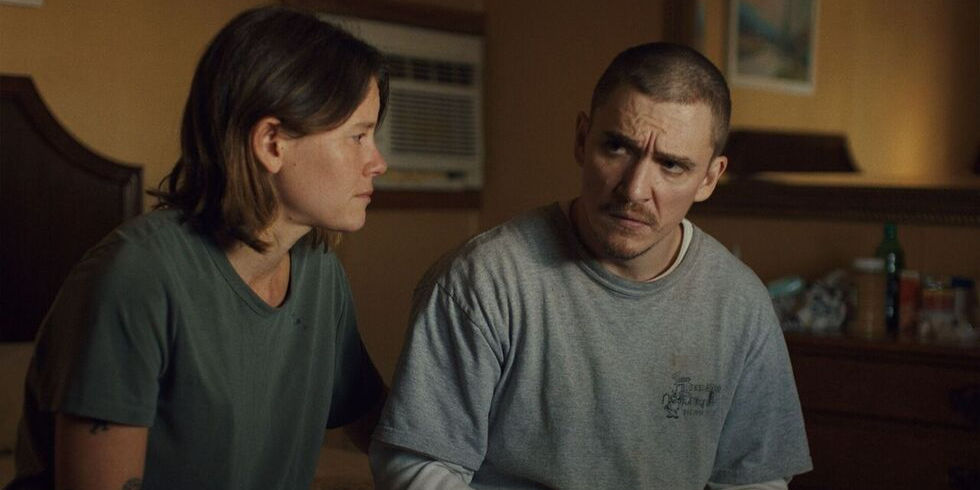
The story starts from the perspective of a young addict named James. Shortly after entering a clinic, seemingly ready to kick his habit, he changes his mind and storms out. He goes home to his significant other - and soon-to-be mother of his child - Dina. The two have plans to move to a new, bigger apartment for their budding family. They just need a little more money. Without a viable source of income and without telling Dina, James hits the street to sling drugs.
Nearby, a couple of addicts named Sam and Manny wander aimlessly, waiting for their next fix. A kid named Harley searches for his drug-addicted uncle. And another young man named Akil juggles being a member of the community’s outreach team while looking for his brother, who has recently relapsed.
Over the course of a few days, each of these characters interacts. Some in larger, more tragic ways than others. The circumstances of each life leave a lasting impact on the viewer. In that way, the film feels like a small-scale version of Paul Haggis’ Crash, told through the lens of modern addiction. The result is an essential exploration of just how deeply addiction directly and indirectly impacts you.
Despite being his directorial debut, Schwartz showcases an impressive talent for capturing the humanity of his characters. Even with so much happening, there is little dialogue in the film. And the audience finds itself learning the most from the ensemble when they are alone. For example, in one of the film’s most memorable silent sequences, a stranger helps James after he finds himself cornered by police. Though the stranger does not judge him, James refuses the help because he deems himself unworthy. In another sequence, the audience can clearly see one character’s personal disappointment through a quick glance in the mirror.
Kyle Gallner continues to prove he’s one of the most underrated working actors today with his heavy-hearted portrayal of James. Fans of his work in the horror genre will particularly find his performance here compelling as he trades in monsters and serial killers for inner demons.
Interestingly enough, the film reteams Gallner with his Smile co-star, Sosie Bacon. She plays his girlfriend Dina, who turns out to be a former addict herself. What starts as a seemingly small role turns into one of the film’s most heartbreaking arcs. After being separated from James, she’s forced to confront her own sobriety and discover what her choices could mean for her unborn child.
Performances from the rest of the ensemble are equally compelling. And the fact that many of the actors are either first-timers or have few credits to their name adds a bit of extra emotional weight. Not knowing who they are adds a layer of authenticity that makes you feel stronger about their relationship to addiction.
The film’s only real problem is that not every arc is resolved by the end. Some characters get no closure at all. At the same time, the cycle of addiction never ends - especially if someone gets sober. By definition, “cotton fever” is a temporary, flu-like illness triggered by injecting drugs that were filtered through contaminated cotton. In other words, it’s a disease addicts are willing to brace for a quick fix. Despite the film sharing its name with the condition, it cleverly proves that no fix is quick and that each high only ever kicks our core pain down the road.
There’s a reason Cotton Fever won the coveted award for Best U.S. Narrative Award at this year’s Tribeca Festival. Schwartz’s portrayal of the cycle and consequence of addiction, as well as his understanding that recovery is a choice, feels fresh. But the film’s breakdown of how easily the effects of substance abuse ripple outward establishes it as a bitter yet important pill to swallow.


